
Safety Guide
Essential PPE Every Construction Worker Needs in Kenya
Practical guidance on selecting hard hats, boots, gloves, visibility gear and safety equipment for every site. Keep workers protected with PPE built for Kenya’s construction environments.
Audience
Construction crews
Focus
PPE selection
Region
Kenya
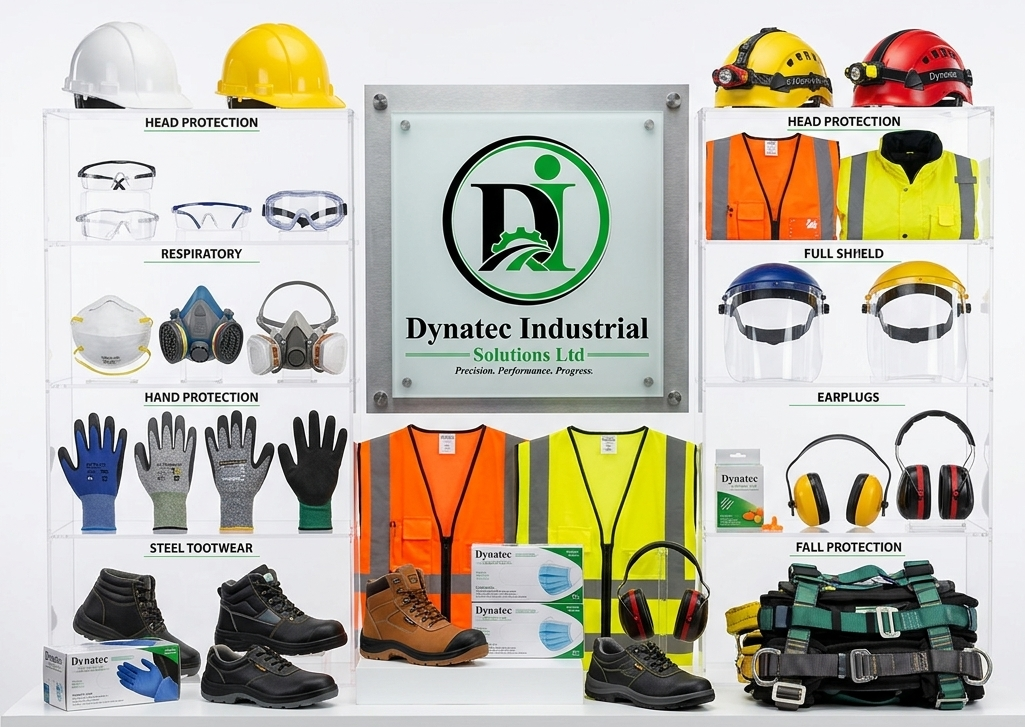
PPE Checklist for Construction Sites
- Hard Hats
- Safety Boots
- Gloves
- Hi-Vis Clothing
- Eye & Face Protection
- Respiratory Protection
Introduction
Personal protective equipment (PPE) reduces the risk of injury on construction sites. In Kenya, employers and workers should prioritise PPE that meets recognised standards and suits local site conditions — heat, dust, uneven terrain and electrical hazards.
Hard Hats
Choose a hard hat certified to EN 397 or equivalent. Key features include:
- Type: choose between low-profile or full-brim depending on sun exposure and falling-object risk.
- Suspension: 4- or 6-point adjustable suspension for shock absorption and comfort.
- Accessories: peak, chin strap for windy sites, and sweatband for hot climates.
Safety Boots
Boots should protect against impact, puncture and provide ankle support:
- Toe protection: steel, composite or aluminium toe caps.
- Sole: puncture-resistant midsole and slip-resistant outsole for muddy/uneven surfaces.
- Comfort: breathable linings and correct fit to prevent blisters in hot climates.
Gloves
Select gloves by task:
- General handling: leather or cut-resistant fabric gloves.
- Chemicals: chemical-resistant gloves (nitrile, neoprene) when handling solvents or adhesives.
- Electrical work: use insulated gloves rated for the appropriate voltage.
High-Visibility Clothing
Use hi-vis vests or jackets with reflective tapes to remain visible near moving equipment and during low light. Choose breathable materials for Kenya's climate and consider mesh designs for ventilation.
Eye and Face Protection
- Safety glasses with side protection for dust and flying particles.
- Face shields for grinding, cutting or chemical splashes.
Hearing Protection
Use earplugs or earmuffs when exposed to sustained loud machinery. Choose disposable foam plugs for convenience or earmuffs when higher attenuation is needed.
Respiratory Protection
Dust and fumes are common hazards. Options include:
- Disposable dust masks (FFP1/FFP2) for basic protection.
- Reusable respirators with P100 or appropriate cartridges for heavy dust, silica or chemical vapours.
Fall Protection
For work at height, use harnesses, lanyards, anchor points and trained rescue plans. Ensure equipment is inspected regularly and rated for the user's weight.
Choosing and Maintaining PPE
- Buy PPE from reputable suppliers and check for conformity markings or certificates.
- Train workers on correct use, fitting and limitations of PPE.
- Inspect PPE regularly and replace damaged items; keep PPE clean and stored out of direct sunlight.
PPE Checklist Tip
A simple site PPE checklist (hard hat, boots, gloves, hi-vis, goggles, respirator) helps supervisors confirm compliance every shift.
Need Professional Engineering Solutions?
Talk to Dynatec's engineering team for industrial maintenance, electrical works, project implementation, PPE supply, and safety solutions.